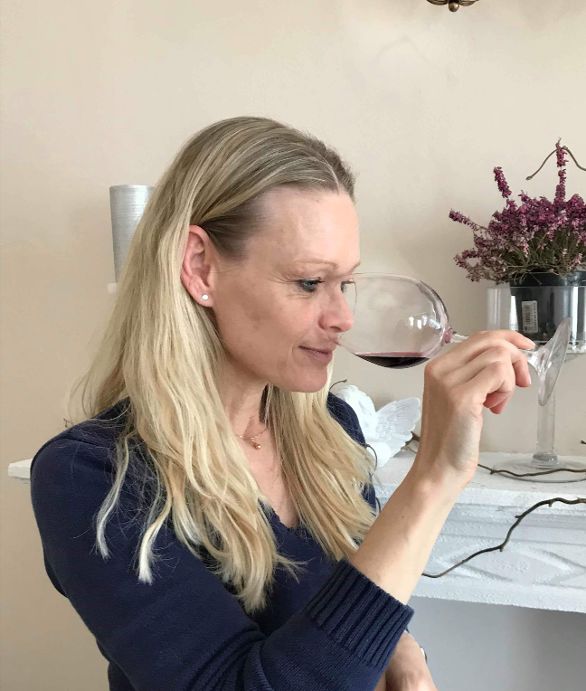
When you as a sommelier judge a wine, you basically use ALL your senses; vision, smell, taste, touch and hearing (when I pour the wine I can actually hear whether it is a still or a sparkling wine 😉).
Using more senses is something everyone should do. Most of the time, we only use our sense of taste, not only when we taste wine, but with everything we eat and drink. You miss out on so much if you just do that!
The senses must be trained and one must also know how to use them. Today I thought I’d talk about VISION, since the first thing you do as a wine taster is to look at the wine……… We consider colour, transparency and consistency.
But why is it so important to look at your wine? First of all you have to remember that WINE IS FOOD. You always look at yor food before you eat it or cook it to check its quality!
So where does the colour in the wine come from? Have you ever thought about that the pulp from black grapes and green grapes have the same color? The color actually come from the grape skin! This means that you can make white wine out of black grapes; you gently press the grapes and leave the skins out. Rosè wines are made almost exclusively from black grapes. The skin has been allowed to lie in a little less. Much like when you make tea. You decide yourself as a producer how pink you want your wine to be.
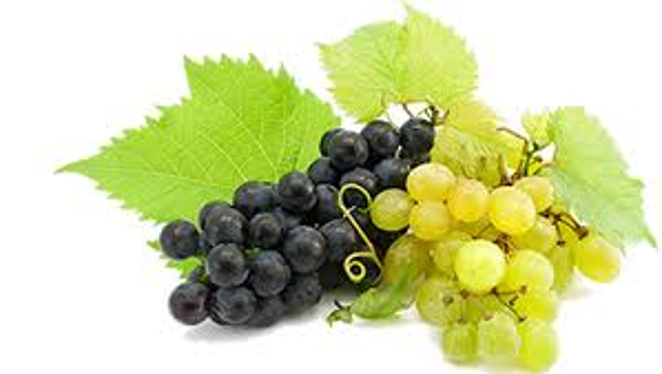

This means that the production method absolutely affects the color of our wine. How hard have I pressed the grapes? Have the grape skins been included in the must? How long have the grape skins been left in? Even the grapes themselves have different shades. Some grapes make more “thinner” wine. But only for the color. Never judge a wine because of the nuance of its color. A “watery” wine in color can have a lot of flavor and strength in it.
All wines change color. It changes with age, production method and other factors. White wine goes from an almost transparent color with light green tones (very young) to golden yellow and amber tones. Red wines go from a purple or violet tone to a tawny brick colored tone. With age, the color particles decay and fall to the bottom of the bottle. Therefore, the wine may appear to have a thinner color as it ages.
By looking at the wine, I can get an idea of what to expect in the nose and mouth. A hint of zone and climate. Cold climates often produce weaker colors. And warm climate deeper colors. The use of wooden barrels changes the color because wood is porous and some oxygen penetrates. The soil is also incredibly important for the color, for example the wine will be deeper in shade if the grapes are grown on clay soil.
Already at this point while I look at my wine, I start to swirl my glass. Not to add oxygen, but because I want to see how it moves in the glass and how it “sticks” to the sides of the glass. It is to check the consistency ie to observe the “legs” and “tears” that forms on the inside of the glass. The narrower the legs and the slower the tears, the more consistenzcy I have in the wine. This phenomenon is due to the alcohol, glycerin, sugar and extracts contained in the wine. One can have water as a starting point. There will be no signs of consistency of water. The rinse aid in the dishwasher sometimes makes it difficult to get the wine to stick to the glass, and it can be difficult to see the texture and consistency.

In conclusion, just by looking at the wine, I can get an idea of how old it is, which grape, climate. This information then helps me in the next phase: SMELL. By just looking, I already have an idea of how my wine will smell!
Watch my YOUTUBE video to get a summery of todays article:
 Wine with Tess